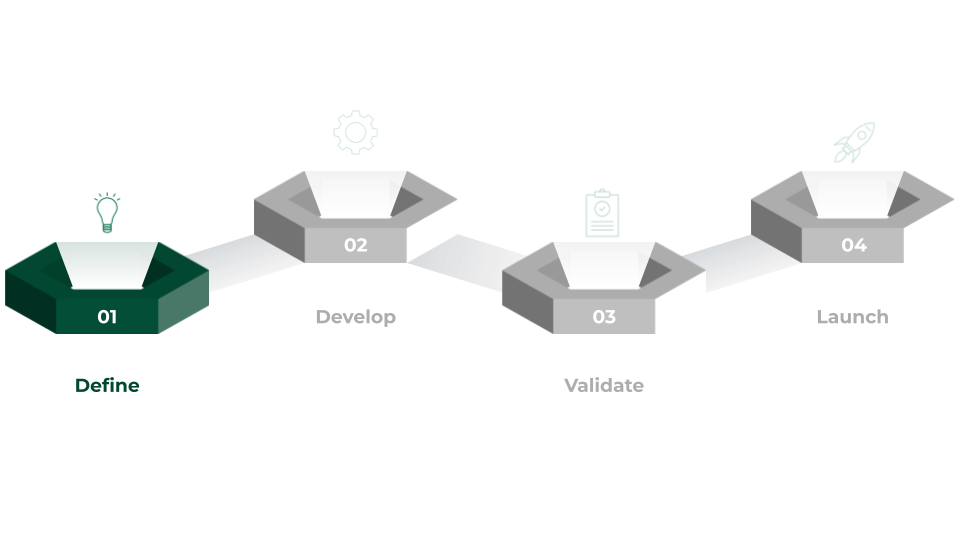
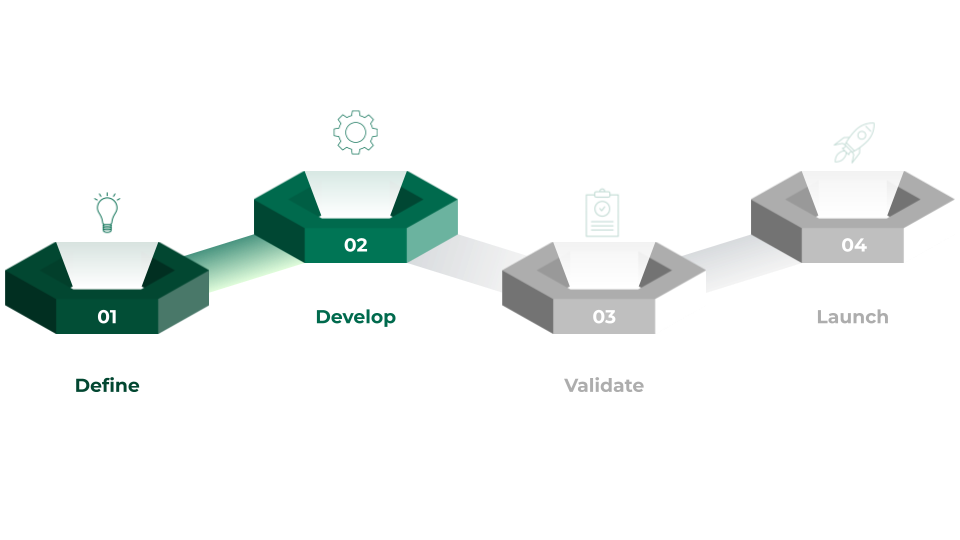
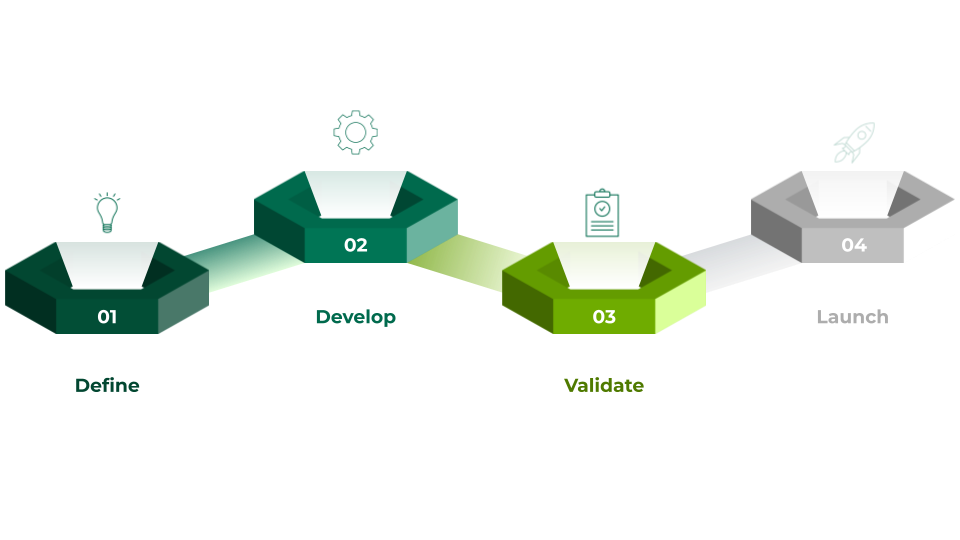
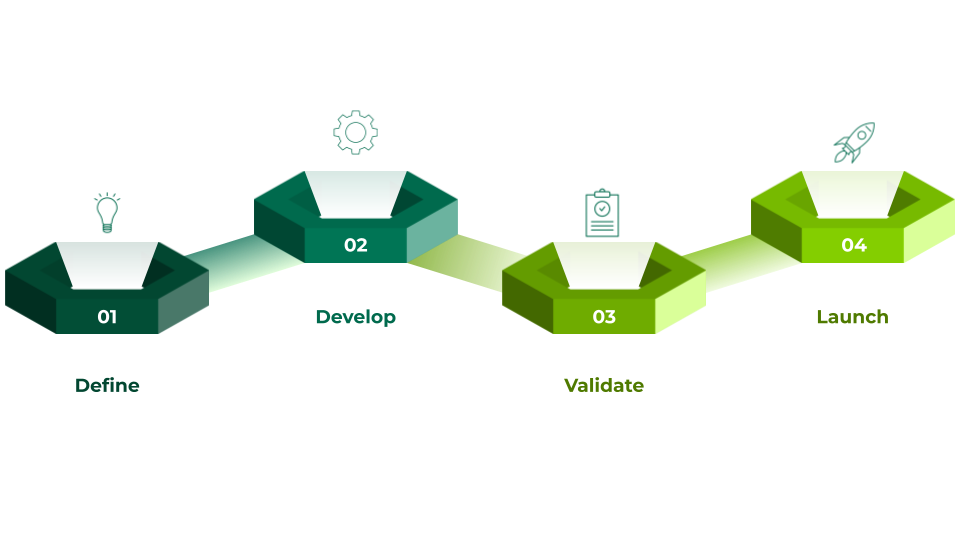
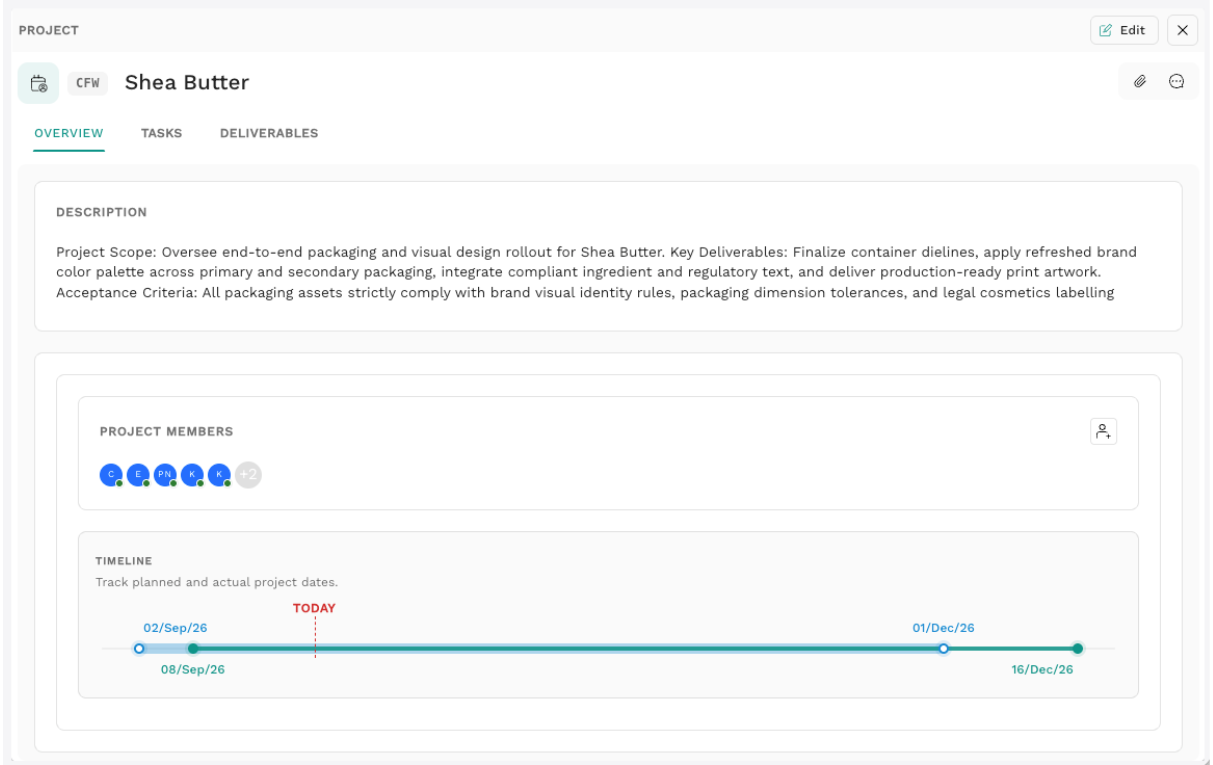
Create structured projects with clear ownership, schedules, members, and cost information. Give every initiative a defined context from the outset and maintain planned and actual timelines as work progresses.
- Define project scope, schedules and ownership
- Track planned and actual dates and costs
- Find projects by status, member or planning horizon
- See progress across active initiatives
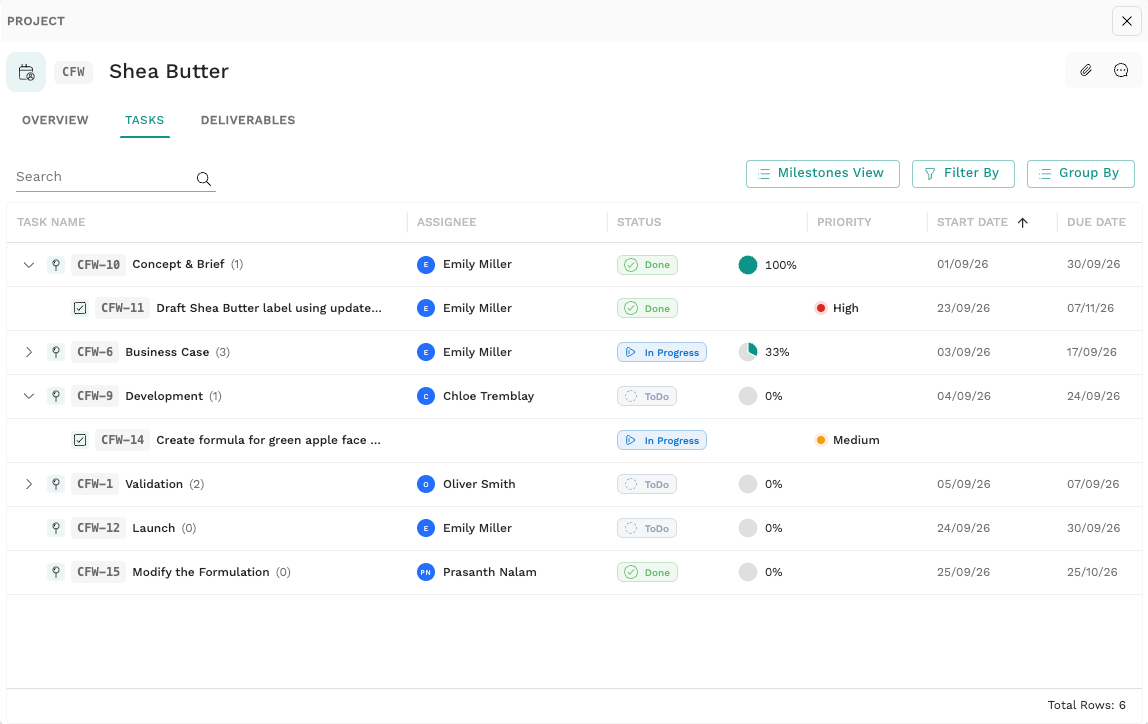
Break complex development programs into meaningful stages and decision points. Assign ownership, set dates, and monitor milestone progress so teams can see what is approaching, completed, or overdue.
- Structure work around development milestones
- Assign owners, dates and responsibilities
- Organize related tasks beneath each milestone
- Identify delays and upcoming commitments early
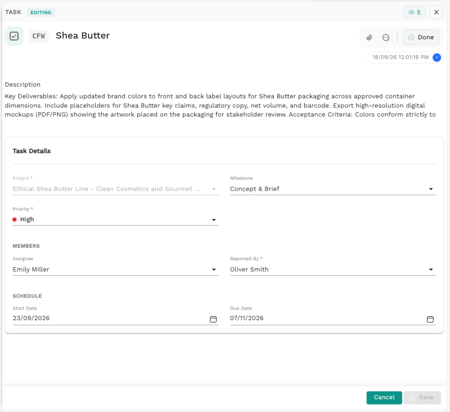
Translate plans into accountable work. Create tasks with priorities, assignees, due dates, and status, then view work within a project or across every project you participate in.
- Manage tasks in structured list and board views
- Filter and group work by project, assignee, or status
- Track work from To Do through completion
- Surface overdue work before it slows the project
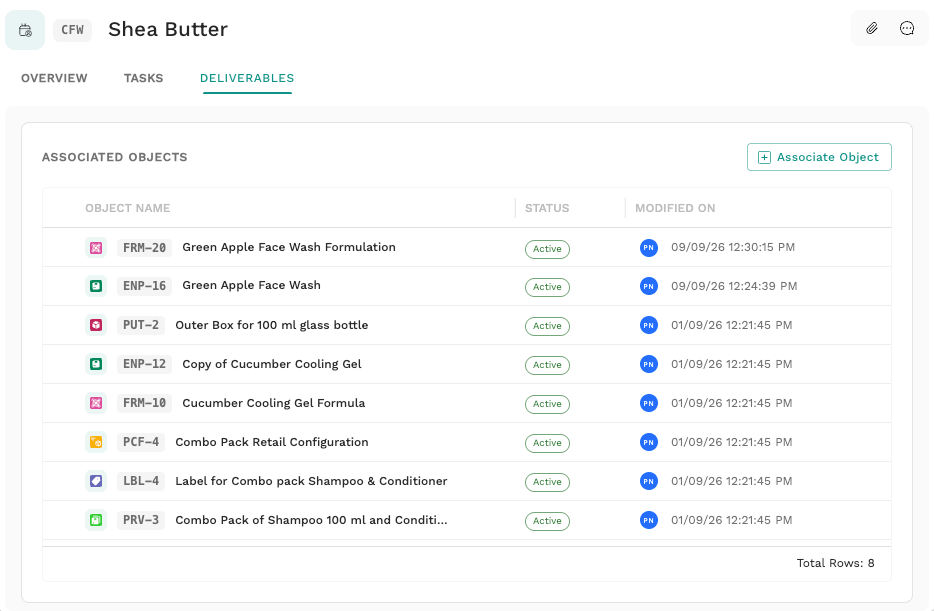
Associate the product records that matter with each project—from formulas and end products to packaging configurations, packaging units, labels and product variants. Teams can see what the project is changing without duplicating the underlying information.
- Bring related product records into the project view
- Reuse shared product information across projects
- Preserve the current version, status, and identity of each record
- Review status and recent changes in project context
Keep files, discussions and updates close to the work they support. Project and task-level documents, comments, and notifications give teams a shared history of decisions, changes, and follow-ups.
- Attach documents to projects and tasks
- Discuss work through contextual comment threads
- Notify assignees and followers when work changes
- Navigate from an update directly to the relevant task
Give the right people access to the right initiatives. Project membership works with role-based permissions to protect project details, tasks, milestones, documents, and discussions while retaining participation history.
- Assign members from the workspace
- Activate or deactivate access without erasing history
- Apply permissions consistently across project content
- Retain assignments, comments, and activity records for traceability








.png?width=1000&height=600&name=Email%20Images-8%20(4).png)