


Product Specification Management

Control Every Product Specification from Idea to Market


Define, approve, version, and connect product, material, packaging, and labelling requirements in one governed system.
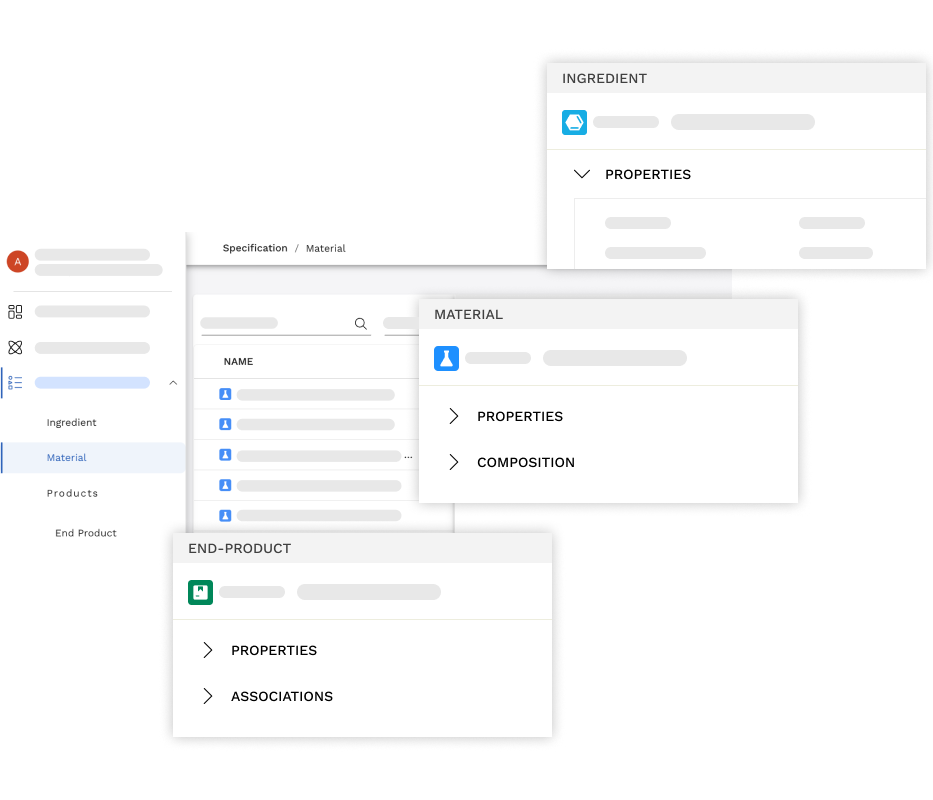
Centralize specificationsControl every revision Stay compliant
Specification Screen Platform

From Product Intent to Market-Ready Pack

Modern specification management brings this information into a structured, searchable, and collaborative system. It creates a single source of truth for every team involved in product development and commercialization.
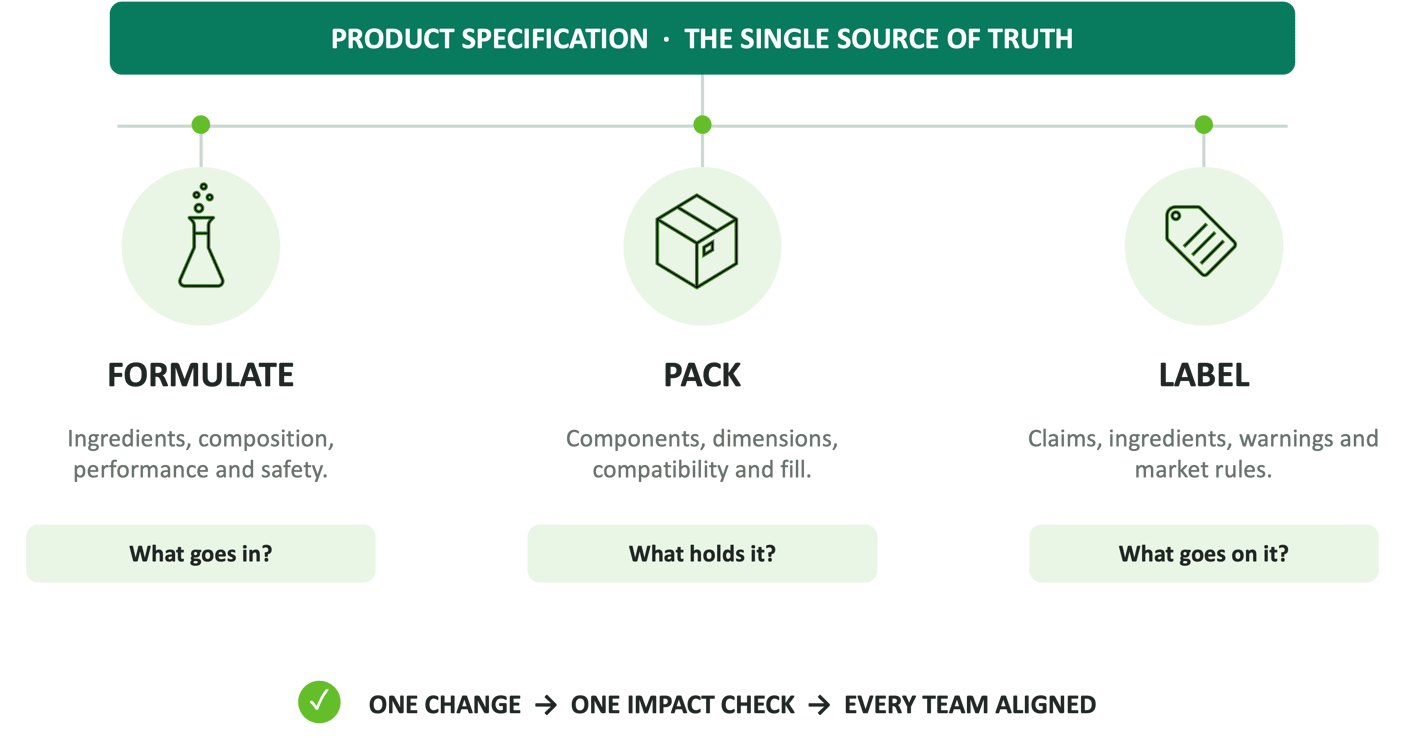
 

Picture 1-1


Key questions your product specifications should answer...

  • What requirements must the product satisfy?
  • How is each product variant defined?
  • Which material and ingredient specifications does the product rely on?
  • Which fill weight, volume, or quantity requirements apply to its packaging?
  • Which version of the product specification is currently approved?
  • Who reviewed and approved each specification—and when?

Variant Specifications

Define clear requirements for products and variant specs.

Techical Specifications

Translate market briefs into actionable technical specifications.

Packaging Specs

Capture fill specs, packaging unit and component level requirements.

Product Labels

Automatically generate and manage label content using approved ingredients, claims, and composition data.

Version Control

Draft and publish workflows with version tracking and built-in audit trails, AI-driven version comparisons.

Collaboration

Align formulation, packaging, quality, regulatory, and commercial teams around standardized specifications.


Material Specification Management

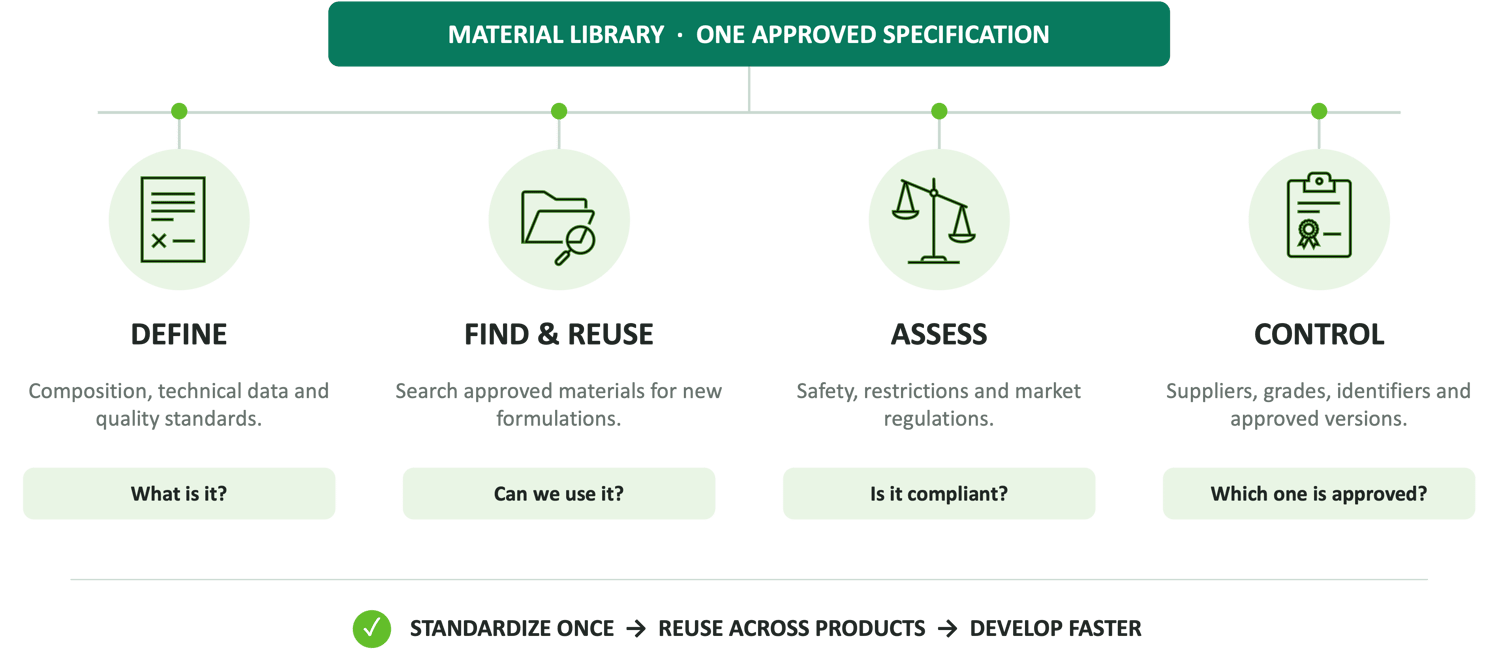
Define, control, and manage material requirements across product categories. Build a reusable material library that helps teams use approved materials, reduce duplicate work, and accelerate product development.


Picture 2

Key questions your material specifications should answer...

  • What is the material, and what purpose does it serve?
  • What ingredients or substances make up the material composition?
  • Which technical, functional, and quality requirements must it meet?
  • Which grade, form, or variant of the material is approved?
  • Which standardized names and identifiers—such as INCI names and CAS numbers—apply?
  • What safety, regulatory, and technical documents are required?
  • Are any ingredients restricted, prohibited, or subject to usage limits?
  • Which version of the material specification is currently approved?

Material Standards

Define standard material requirements and specs for different product categories.

Search & Reuse

Search for suitable ingredients and reuse approved materials across formulations.

Composition

Review ingredient and substance composition, safety information, and applicable regulatory requirements.

Alternative Materials

Manage and compare alternative materials based on performance, cost, availability, safety, and compliance.

Compliance Assessment

Identify restricted ingredients, applications and usage limits during formulation development.

Change Control

Control changes, versions, and assess the formulas affected on material changes.

Specification Management Works Better When Everything Is Connected

Manage the end-to-end process, not just scattered information.

Product family

Product Portfolio

Structure your product portfolio and connect every product variant to its approved specifications.

Formulation

Formulation

Connect formulations to finished-product specifications and trace material usage and alternatives across products.

Packaging Icon

Packaging

Define, approve, and version packaging requirements from individual components to pallet configurations - in one platform

Why Teams Choose Plevenn PLM?

3X

increase in product discoverability

~50%

improvement in requirement standardisation

~70%

reduction in packaging and labelling errors

See how Product Specifications solves your team’s biggest bottlenecks.


Manage product specifications, connect them to your portfolio, materials, formulations, packaging, and labels, and maintain compliance in one platform.

 

Take the next step

Stop managing fragmented data. Start building high-quality formulas in one connected platform.