

Bring ingredients, formulations, nutrition statements, product specifications, regulatory information, and packaging together in one connected product development platform.
Every new product brings decisions about taste, functionality, nutrition, ingredient suitability, quality and labelling. Disconnected data makes those decisions harder to control.
Balance nutritional goals with product performance, sensory expectations, and formulation constraints.
Manage compound ingredients, additives, varying raw-material compositions, and changing supplier specifications.
Keep market requirements, ingredient conditions, allergens and label information connected to development decisions.
Control formulations, product specifications, variants, and substitutions as products evolve.
Bring structure, visibility and product context to every development stage—without losing the decisions made along the way.
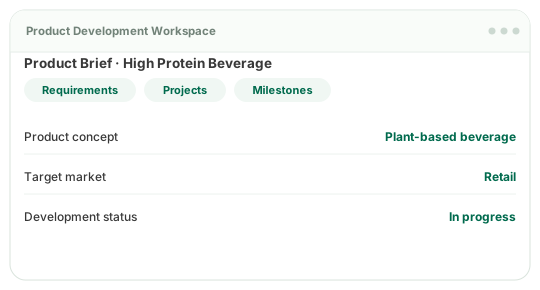
Translate consumer needs, market opportunities, and product concepts into clear requirements, project objectives, and development briefs.
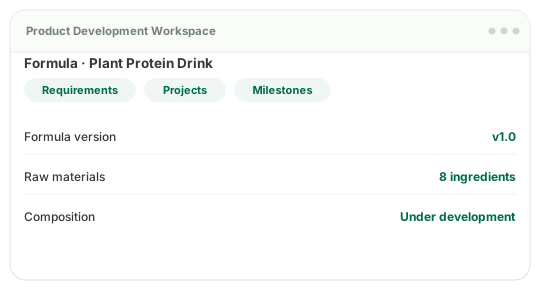
Establish ingredient and raw-material choices, develop formulas, and link them to intended finished-product requirements.
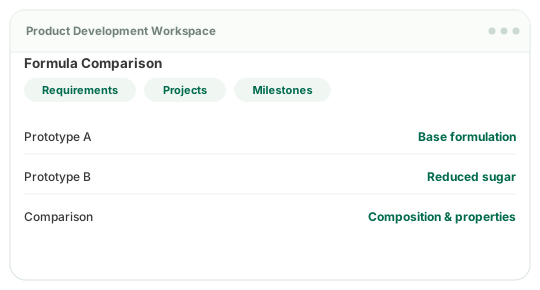
Review alternatives, adjust ingredient quantities, compare nutritional facts, and preserve the history of formulation decisions.
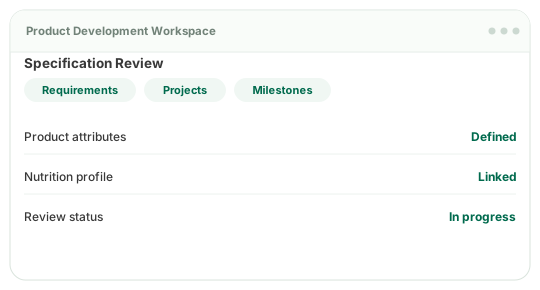
Assess product specifications, quality criteria, nutrient information, and applicable regulatory requirements as the product evolves.
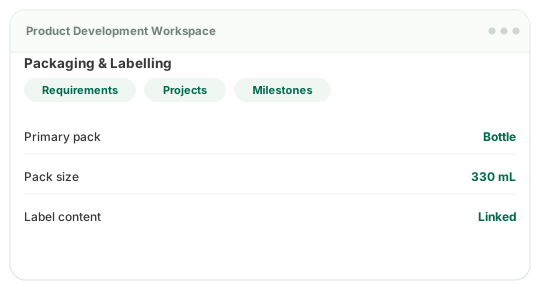
Connect approved product information to packaging configurations, label content, and variants.
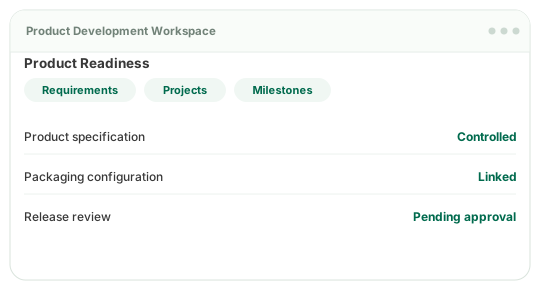
Manage product readiness with controlled records, approved specifications, documentation, tech transfer, and a connected development context.
A food product is more than its formula. Plevenn maintains relationships among the materials, compositions, specifications, nutrition information, and packaging that define it.
Every decision stays in product context—from material changes to finished-pack information.
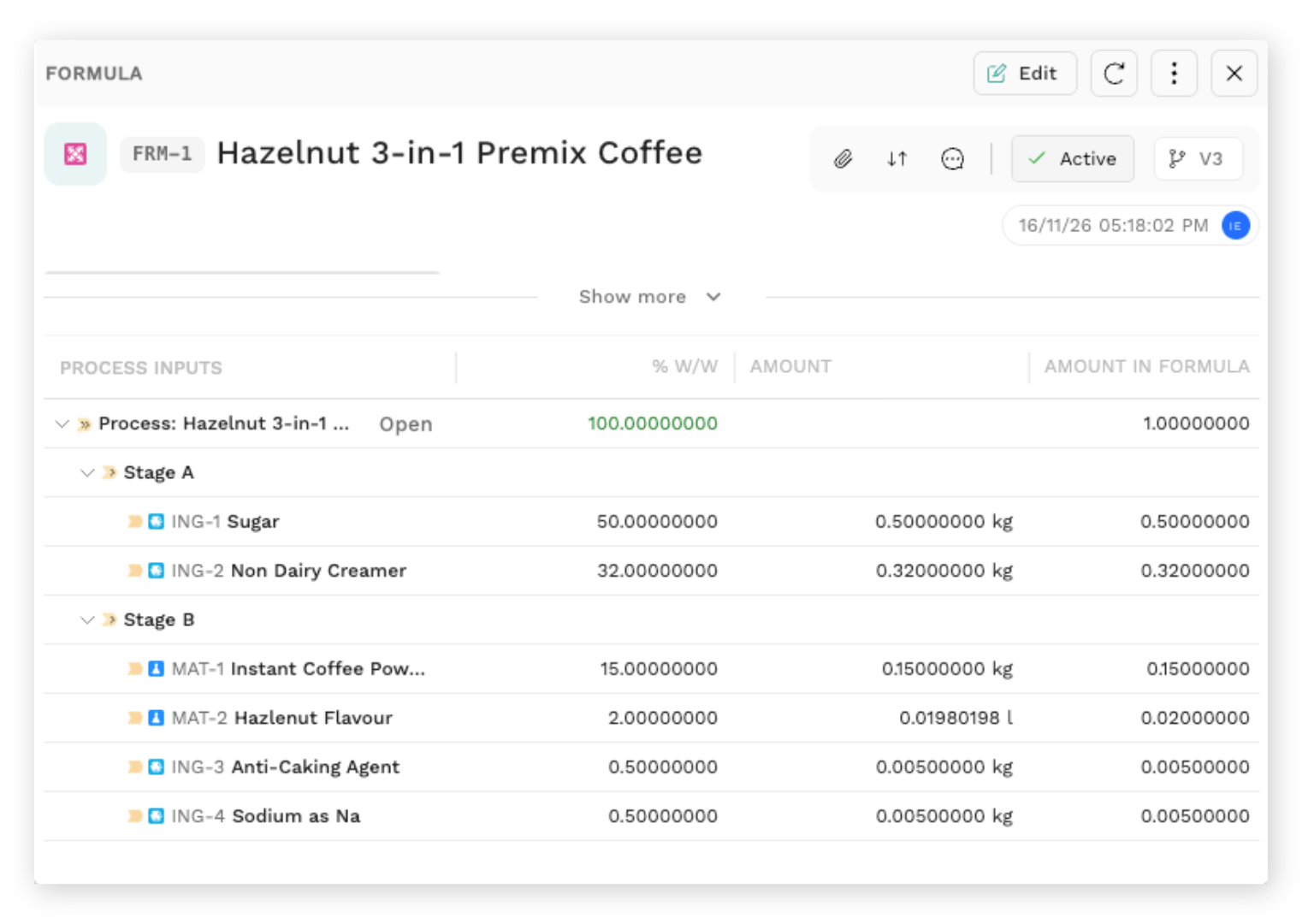
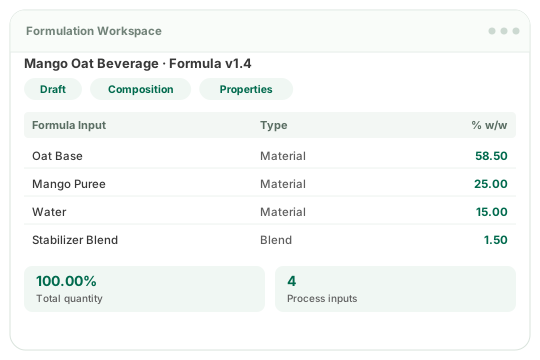
Create, evaluate, and refine food formulations while keeping quantities, ingredient contributions, nutritional assays, and revisions connected.
Build formulas using raw materials, compound ingredients and additives with controlled quantities and composition.
Assess composition, theoretical yield, and calculated properties against the product requirements.
Evaluate alternatives and variants, scale development quantities and preserve formulation history.
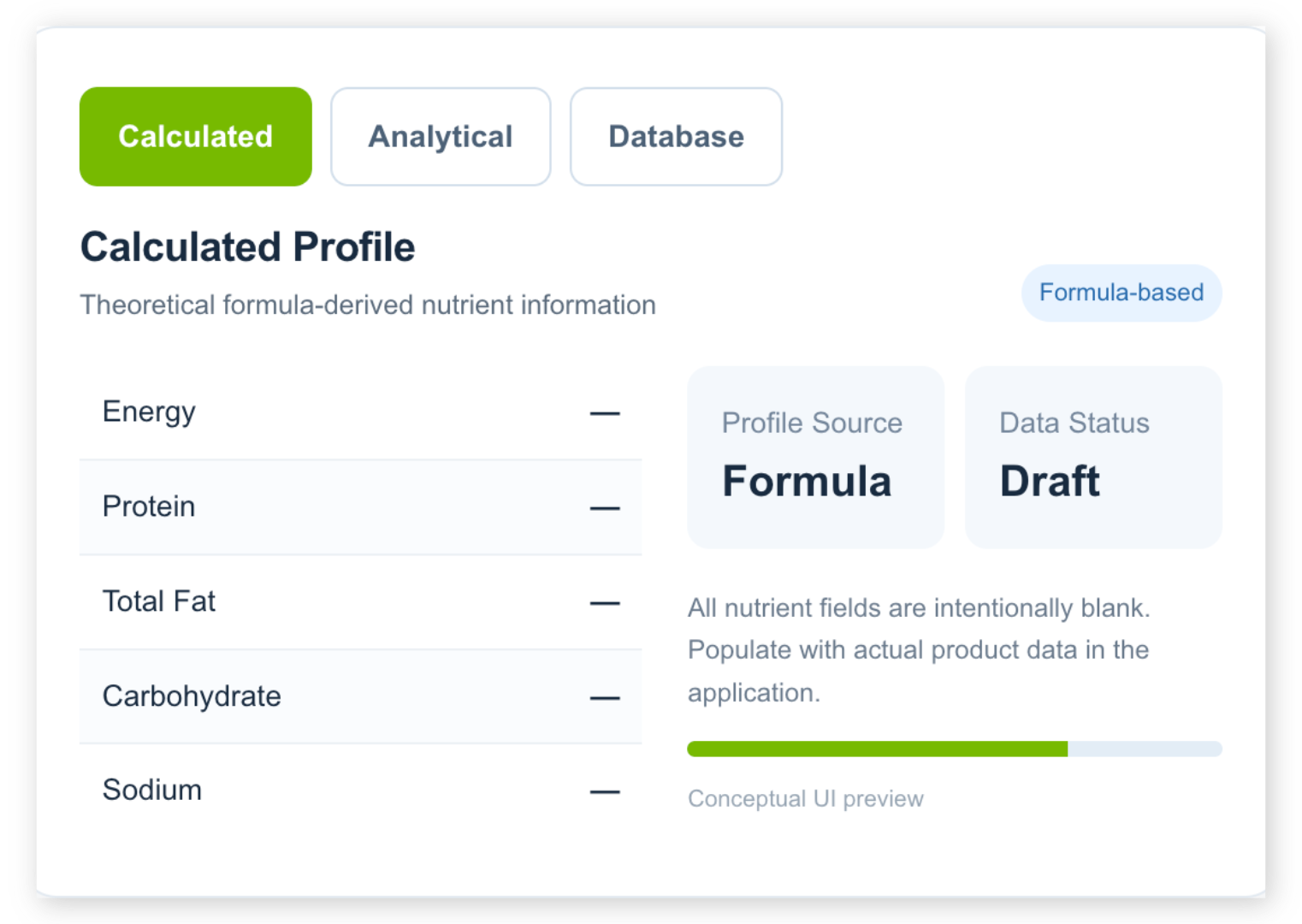
Manage calculated and analytically determined nutrition information alongside your formula. Evaluate nutritional requirements while preparing for label declarations.
A connected product-data journey, rather than isolated nutrient spreadsheets.
Derive theoretical nutrient information from the formula and ingredient nutrient data using appropriate calculations.
Keep calculated, analytical and database-sourced nutrient profiles associated with the same formula.
Evaluate alternatives and variants, scale development quantities and preserve formulation history.
Compare nutrient information to relevant finished-product requirements.
Give R&D, Quality and Regulatory teams a structured foundation for material identity, composition, specification and reuse.
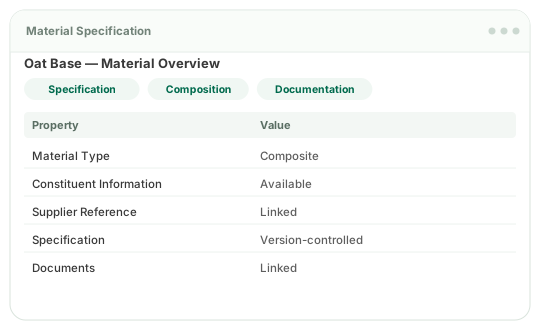
Store identities, suppliers, properties, specifications and supporting documents in product context.
Represent compound materials and their constituent ingredient information.
Assess material substitutions and their effects on affected formulas and product requirements.
Use consistent ingredient and product information to support market-specific regulatory reviews and help prevent late-stage surprises.
Organize ingredient permissions, restrictions, additive functions and applicable usage conditions.
Associate relevant allergen information with constituent ingredients and materials to support formulation review and labelling preparation.
Connect nutrient profiles to market-specific declaration requirements and label content.
Keep proposed claims and related product information connected for evidence and eligibility review.
Trace where affected materials are used and support review of relevant formulas and products.
Organize product records and evidence relevant to internal regulatory workflows.
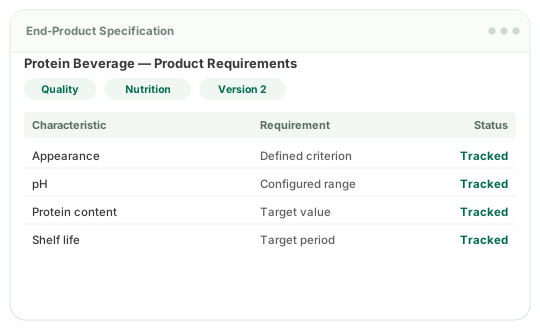
Connect product briefs with measurable criteria, material properties, and controlled finished-product specifications.
Define relevant properties, requirements and acceptance criteria.
Maintain physical, chemical, nutritional and quality targets as appropriate.
Retain versions, supporting documents and relationships with formulas and products.
Bring primary and secondary packaging, component specifications, multi-packs, and label information into the product development context.
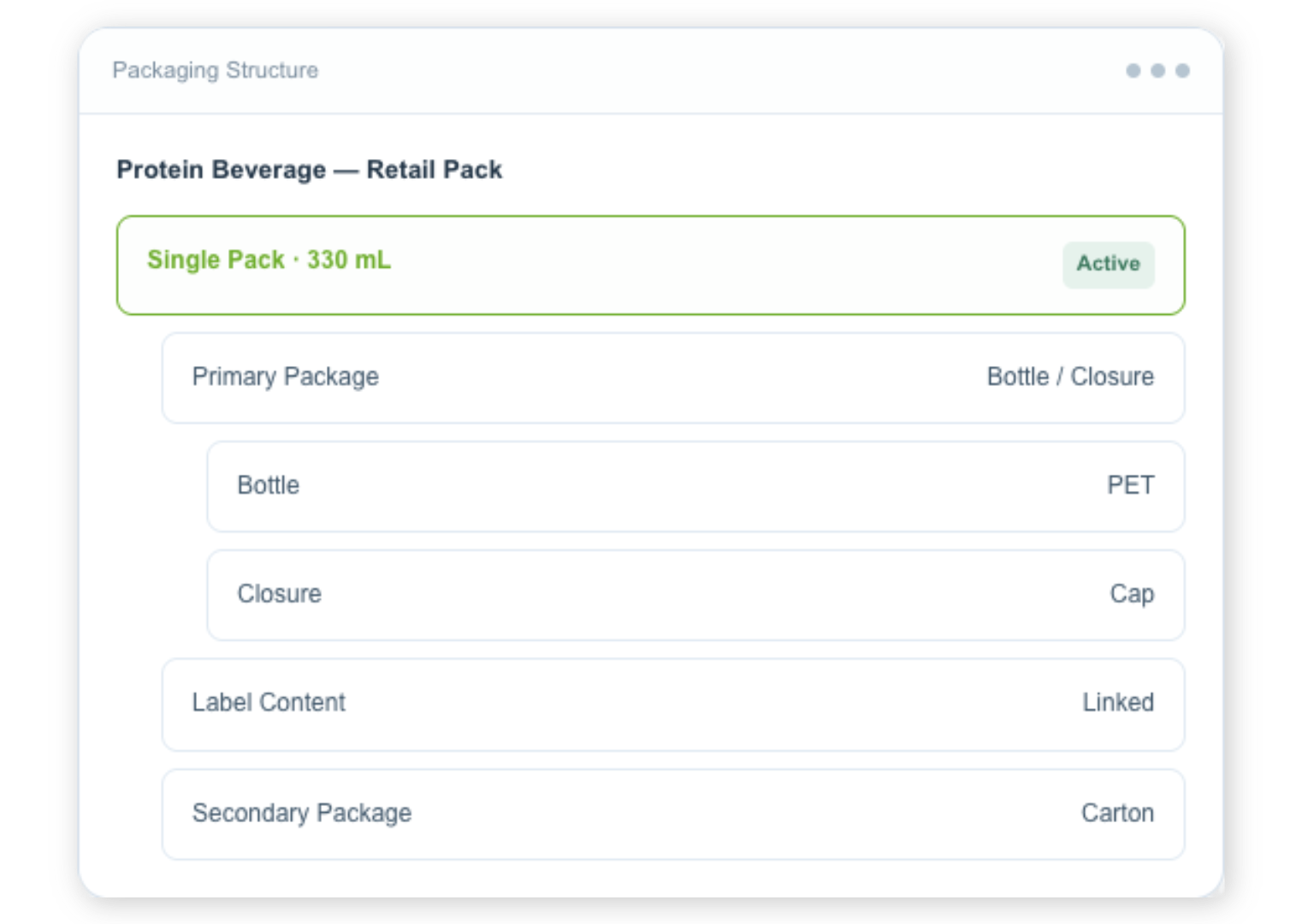
Organize primary and secondary packaging components and their specifications.
Maintain packaging configurations and labeling across sizes, formats, and product variations.
Associate relevant ingredient, nutrition and product information with label content.
Represent bundle and multipack structures through connected variants and pack configurations.
Different development decisions, one connected product environment.
Create a formulation around nutritional requirements and compare theoretical nutrient information with specification targets.
Evaluate ingredient changes and formulation alternatives, and review composition and nutrition implications to meet Claims.
Reuse approved product knowledge while controlling changes to formula, flavour, nutrition, packaging or specifications.
Find affected formulas, evaluate alternative ingredients and assess the product information that needs review.
Connect ingredient, nutrition, and product information with relevant local label declaration requirements.
Manage multiple pack sizes and configurations associated with the same product and its variants.
Give each function access to product information in the context of its own responsibilities.
Develop formulas, evaluate nutrition facts, and manage revisions.
Review claims, ingredients, formulation, and nutrition declaration information.
Control material specifications and product requirements.
Coordinate product briefs, projects, developmental stages, and readiness.
Connect packs, variants, components, label, and artwork information.
Combine deep scientific formulation with the nutritional data, governance, and collaboration of a modern PLM platform.
Food and beverage PLM manages the product information and development activities that connect ingredients, formulas, nutritional information, specifications, packaging and controlled product records.
Formulation PLM focuses on developing and controlling product composition and requirements. Manufacturing recipe systems additionally address plant execution, equipment, process parameters and batch operations. These are related but distinct scopes.
Plevenn is positioned here as a product development PLM system. Plant execution, production recipe control and end-to-end physical lot traceability are distinct manufacturing capabilities and are not implied by this page.