


Resources



LEARN

Careers

Connect

From innovative cosmetic formulations to market-ready products, Plevenn connects ingredients, formulations, specifications, regulatory information, and packaging in one AI-driven Product Lifecycle Management platform.
Bring structure, visibility and collaboration to every stage of beauty product development.
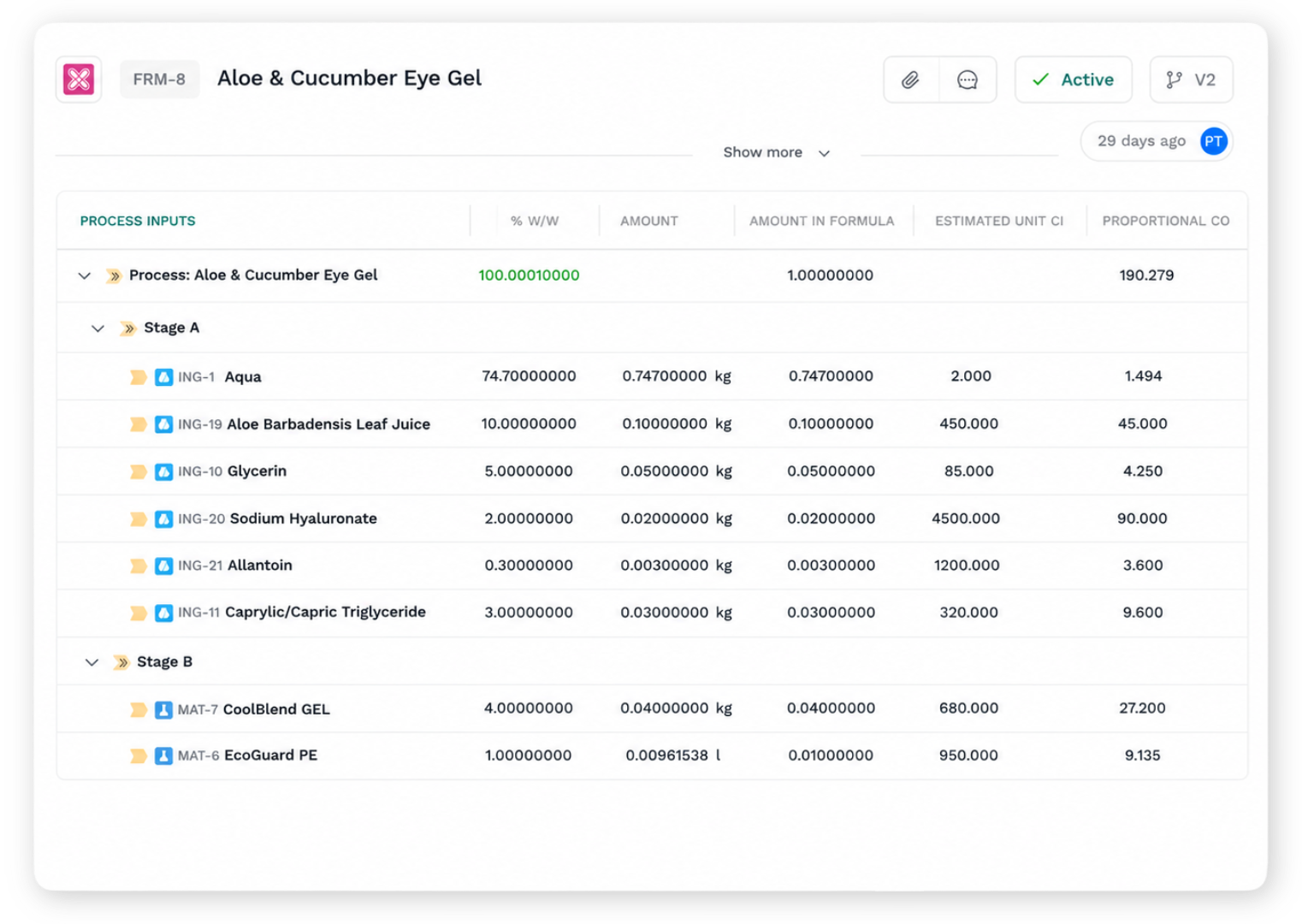
Develop, evaluate and refine cosmetic formulas using connected ingredient knowledge, calculated compositions and product specifications.
Create formulas, manage prototypes and evaluate ingredient alternatives or revisions.
Calculate constituent concentrations, active contributions and relevant formulation properties.
Apply scaling rules and maintain traceable versions as formulations mature.
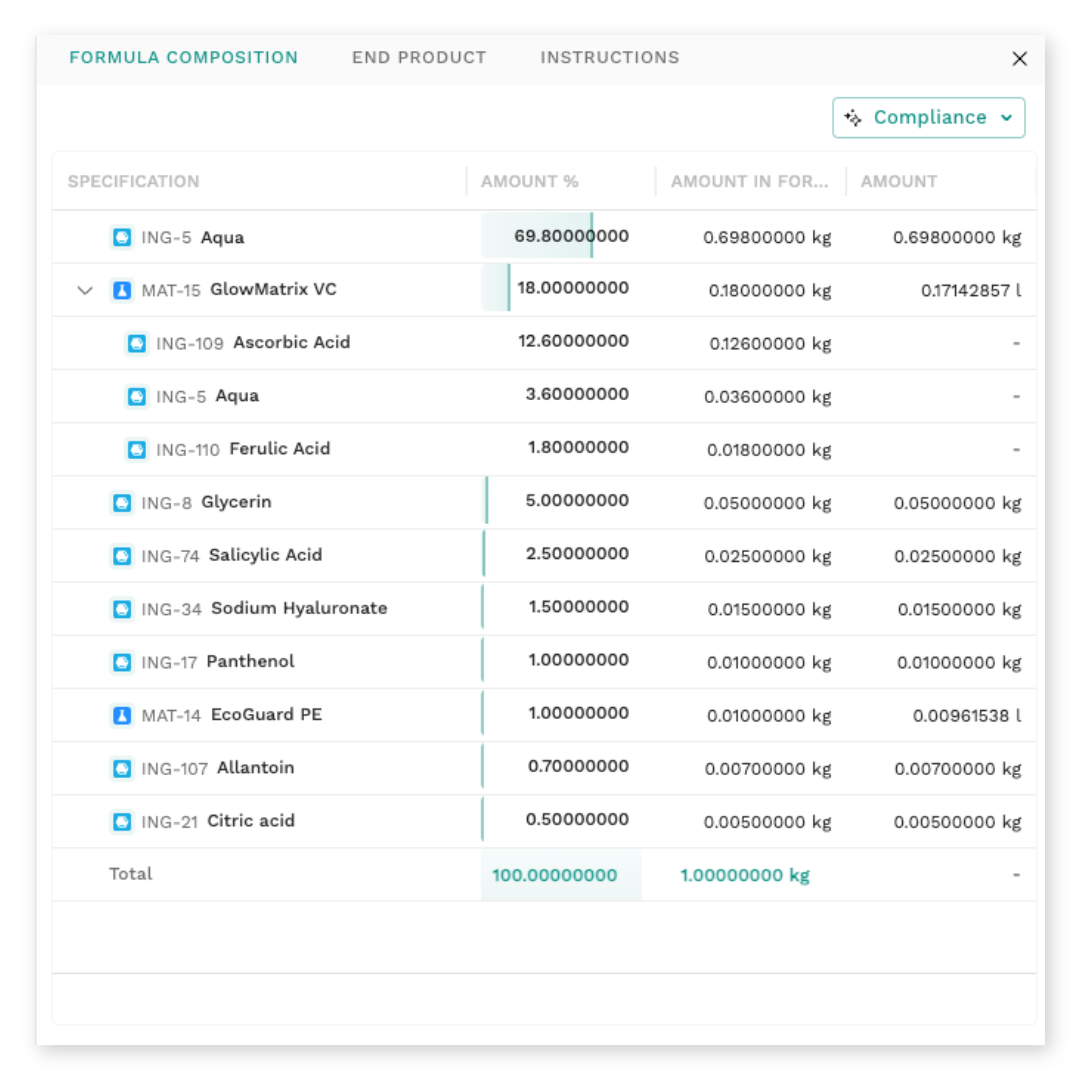
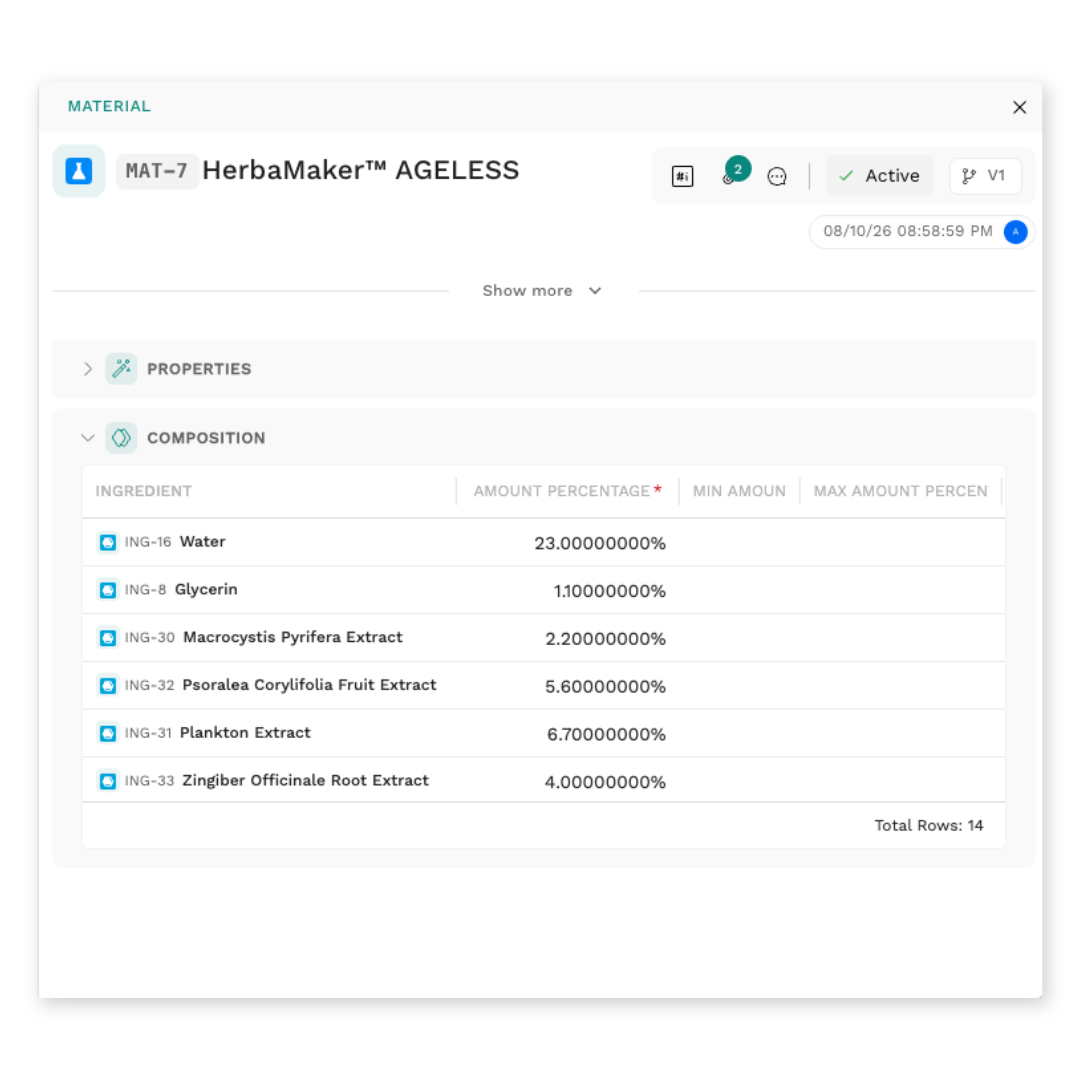
Turn fragmented raw-material records into structured, reusable knowledge that supports formulation, regulatory assessment and product development.
Maintain supplier data, specifications, documents and technical properties.
Connect multi-component materials to their INCI/CAS identities and concentration information.
Identify candidate replacements and reuse existing development knowledge.
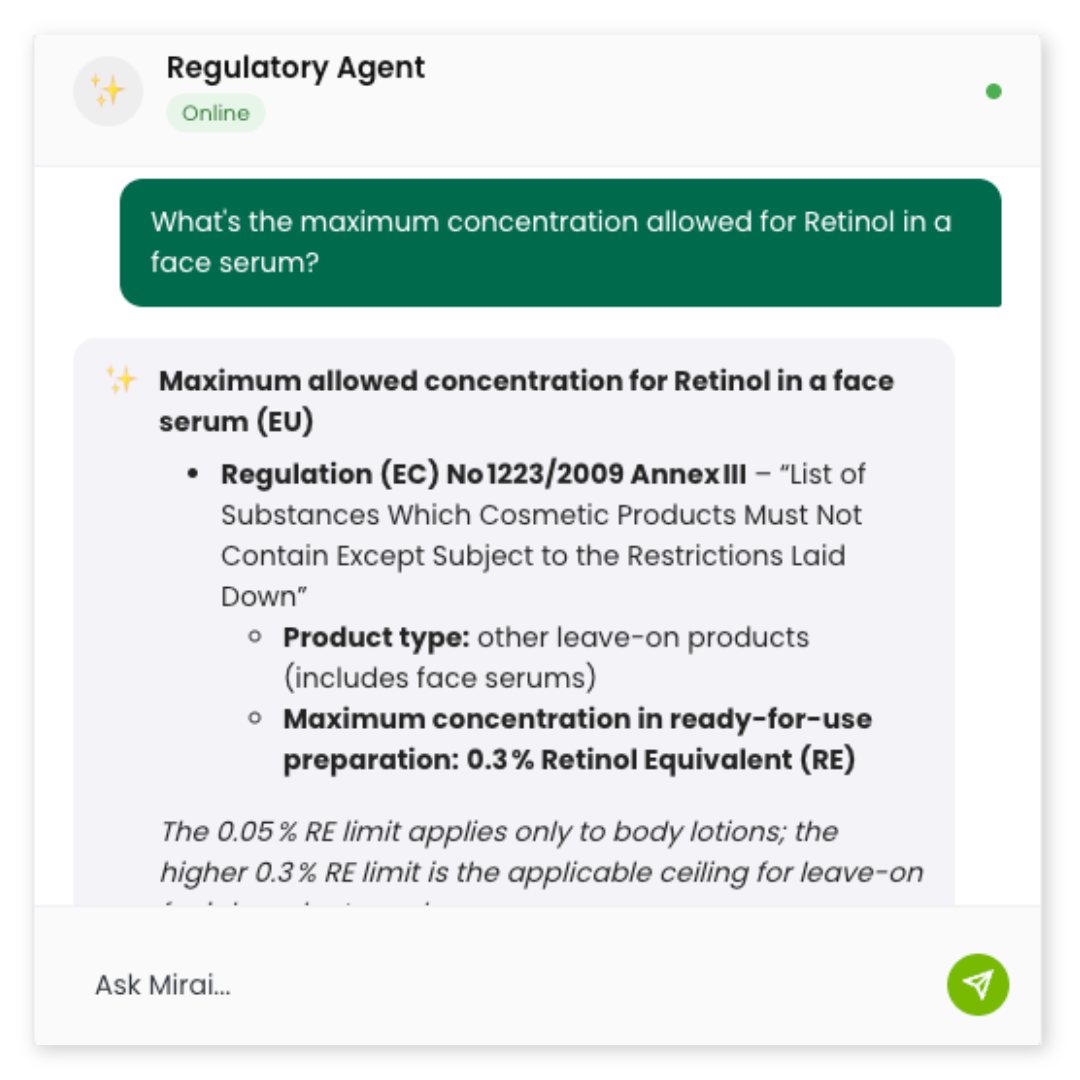
Connect cosmetic ingredient requirements to the materials and formulas that depend on them, so regulatory review can start earlier in development.
Structure standardized ingredient identities and regulatory reference information.
Assess applicable prohibited substances, concentration limits, and permitted-use conditions.
Trace ingredient-to-material-to-formula compliance when requirements evolve.
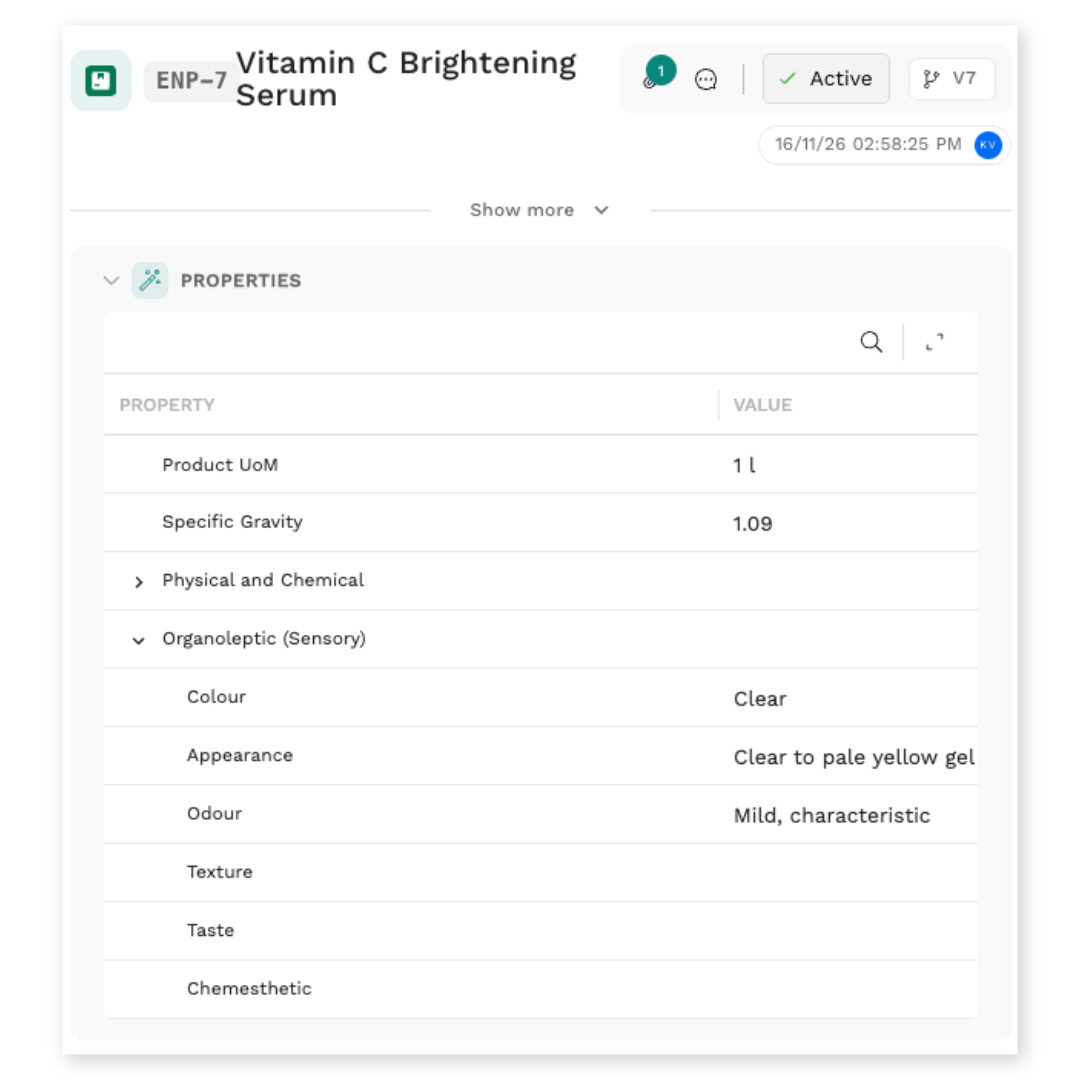
Translate product intent into measurable quality specs and connect them to the formulas, materials, and products they govern.
Maintain material and finished-product specifications, relevant properties and quality targets.
Use formulation and material information to evaluate supported calculated properties.
Maintain clear relationships between current and historical product requirements.
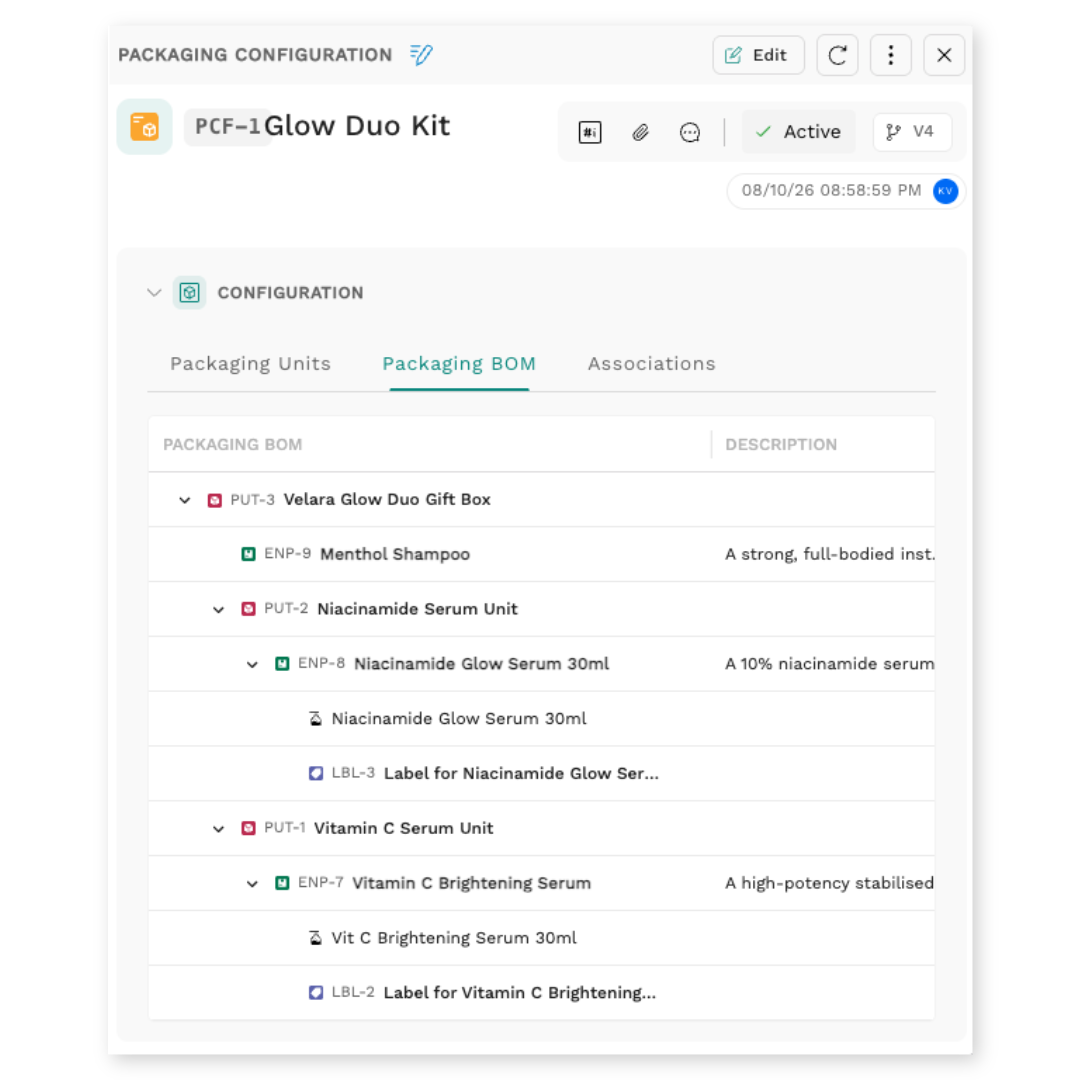
Bring primary and secondary packaging, component specifications, multi-packs, label information, and artwork into the product development context.
Connect primary, secondary, and tertiary packaging components to packaging configurations.
Support pack sizes, product variants, gift sets and multi-product configurations.
Maintain label information and controlled revisions alongside the product.
Real product development situations where connected product data makes a measurable difference to clarity and coordination.

Connect product briefs, requirements, materials, formulations, specifications, and packaging in a single NPD project.

Adjust ingredients, evaluate composition, and preserve a traceable formulation history.

Identify related materials, ingredients, and formulas to support regulatory impact review.

Understand material usage and assess changes to specifications or composition.

Reuse approved product knowledge across new fragrances, colors, sizes, and variants.

Connect multiple products through packaging configurations without duplicating their definitions.
Bring ingredients, formulations, specifications, regulatory information and packaging together with Plevenn.