






Resources


LEARN

Careers

Connect

Define, manage, and version all your packaging in a single, centralized platform
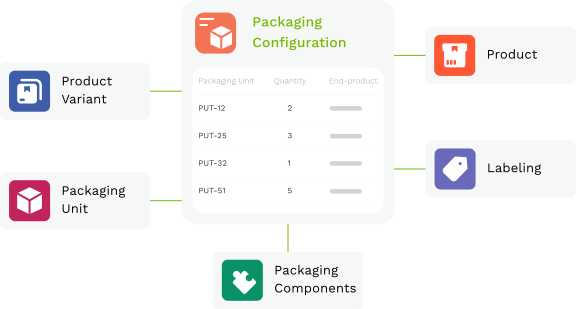
Define, manage, and version all your packaging in a single, centralized platform
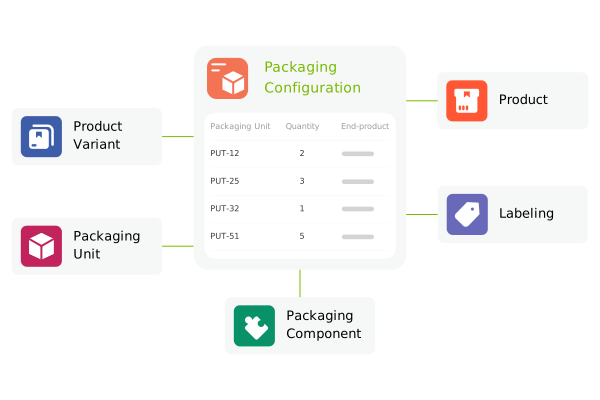

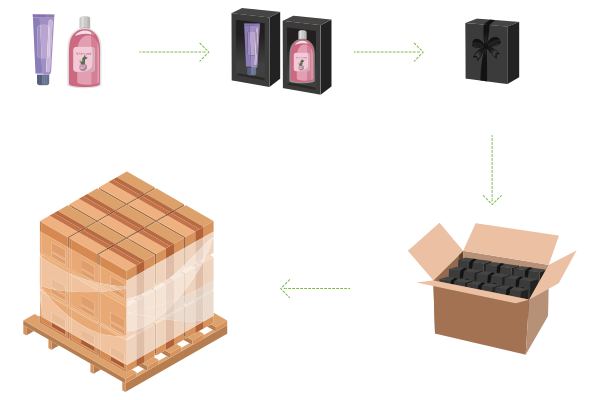
Define packaging as a structured hierarchy rather than a flat record.
Capture:
Primary packaging
Secondary packaging
Tertiary packaging
Bundled and multi-pack configurations
Kits and gift-set style commercial packs
This makes packaging easier to understand, govern, and reuse across products.

Create and manage packaging units at every level, including bottles, cartons, master cartons, and pallets, with complete visibility into each component and sub-components
Build consumer, trade and logistics packaging hierarchies that reflect how products are actually packed, grouped, and shipped across markets.
Link product variants and end products directly to their packaging configurations, ensuring every SKU has a clearly defined, approved pack structure at all times.
Configure multi-SKU bundles and formats with shared or distinct packaging components, without duplicating base structures.

Track every change made to a packaging specification, including what changed, who changed it, and when, with a complete version history for each pack unit.
Route packaging changes through structured review and sign-off workflows before they take effect, reducing errors that reach production.
Reuse approved packaging components across multiple products and configurations to reduce design effort and ensure consistency across the portfolio.
Manage region-specific pack configurations from a single base structure — without creating separate, disconnected records for each market.
Keeps a record of changes made to multiple versions of a formula or recipe, allowing you to monitor and manage the history of these revisions.
Ensure that a complete history of modifications is preserved, including who made the changes and when they occurred.
Compare different versions of a formula or recipe to understand the modifications made between them. This is crucial for quality control and decision-making.

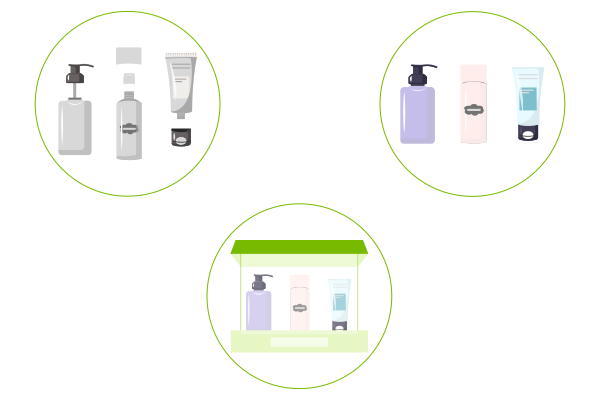
Capture packaging at the level that teams actually work with.
Maintain structured definitions for:
Packaging units
Packaging components
Component roles
Quantities and composition
Material-related details
Supporting specifications and documents
This helps teams move beyond static packaging descriptions and manage packaging as real product data.
Keeps a record of changes made to multiple versions of a formula or recipe, allowing you to monitor and manage the history of these revisions.
Ensure that a complete history of modifications is preserved, including who made the changes and when they occurred.
Compare different versions of a formula or recipe to understand the modifications made between them. This is crucial for quality control and decision-making.

Assists in ensuring that formulas and recipes adhere to both local and international regulatory standards and requirements, which are essential for product safety and legality.
Track and manage compliance related documentation, certifications, and approvals. This ensures that all necessary paperwork and records are readily available for audits and inspections, helping to avoid legal issues and regulatory fines.
Foster seamless collaboration among cross-functional teams engaged in the product development journey, ensuring a collective approach to outcomes.
Achieve unparalleled flexibility and mobility as users access the cloud based application from anywhere, tailored to their preferences. Support on-the-go decision-making effortlessly.


Many teams struggle once packaging moves beyond a simple one-product one-pack model.
Plevenn is designed to support real commercial structures such as:
Single packs
Multi-packs
Promotional bundles
Kits
Gift sets
This gives teams a more practical foundation for how products are actually packaged and sold.

Manage packaging with the control needed to govern change, the reuse needed to improve consistency, and the flexibility needed to support market variation.
Support:
Packaging unit versioning
Version history and full change traceability
Structured review and approval workflows
Approved packaging definitions
Component reuse across products and configurations
Shared base structures for market-specific variants
This helps teams reduce duplication, improve consistency, maintain control over packaging changes, and adapt packaging across products and markets without creating disconnected records.
Keeps a record of changes made to multiple versions of a formula or recipe, allowing you to monitor and manage the history of these revisions.
Ensure that a complete history of modifications is preserved, including who made the changes and when they occurred.
Compare different versions of a formula or recipe to understand the modifications made between them. This is crucial for quality control and decision-making.

Manage pack structures across retail, foodservice, promotional, and export formats with stronger control over market-level variation.

Control primary, secondary, and tertiary packaging across beauty, skincare, and personal care product ranges.

Standardise packaging structures across high-volume SKU portfolios and multi-market distribution models.

Manage packaging across bottles, blister packs, sachets, cartons, and bundled formats with clearer component traceability.

Maintain accurate packaging definitions for industrial and hazardous product formats with stronger material and configuration control.

Connect packaging definitions to finished product requirements and execution processes across plants and production contexts.


From start-to-finish, the design and strategy team provide all of the guidance and expertise necessary to build a high-conversion website.



Define pack structures during product development and iterate quickly across variants without losing traceability.

Manage component specs, reuse approved structures, and submit changes through controlled workflows.

Verify pack configurations against approved specs and review version history during audits and inspections.

Access accurate logistics unit configurations and supplier data to plan and execute procurement efficiently.

Confirm pack formats and market variants are aligned with commercial and regional launch plans.

Use packaging records to support compliance documentation and market-specific regulatory submissions.
Read helpful articles on trends, tips, and ideas for the F&B, cosmetics, chemical, and pharma industries to help your business grow.